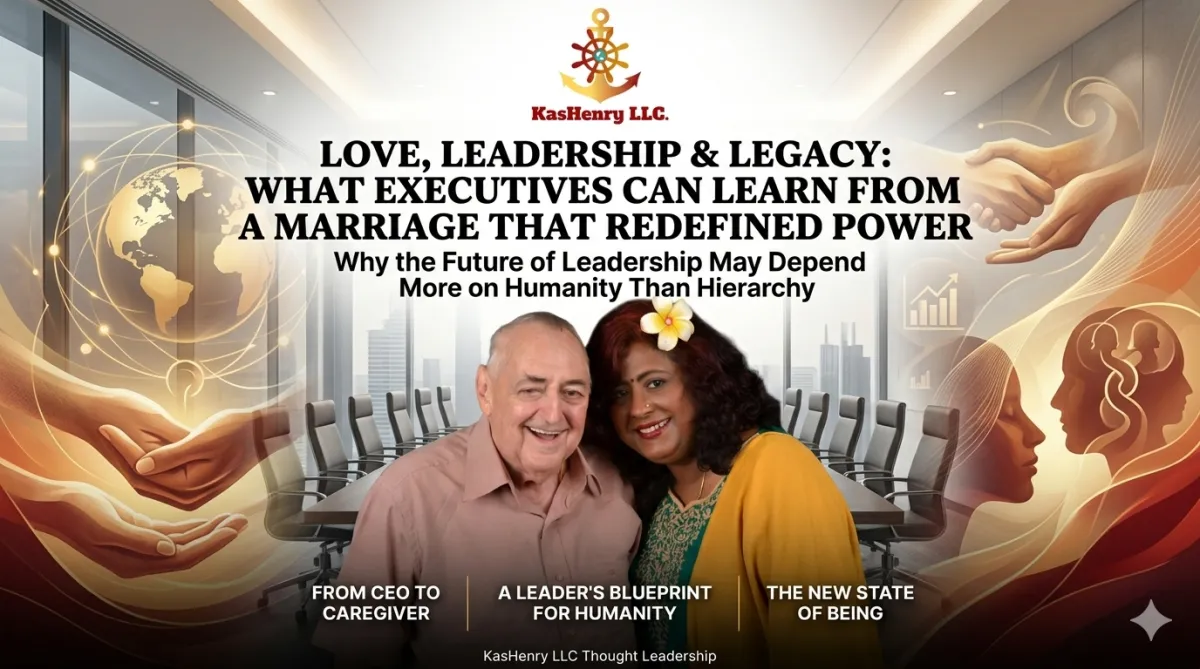
Love, Leadership & Legacy: What Executives Can Learn From a Marriage That Redefined Power
In boardrooms across the world, leaders are being asked to solve increasingly complex challenges: fractured workplace cultures, burnout, declining trust, innovation fatigue, and the growing disconnect between organizational performance and human well-being.
Yet some of the most profound leadership lessons are not emerging from strategy decks, management theories, or executive retreats.
They are emerging from deeply human relationships.
This is the story of a marriage that quietly challenges nearly every modern assumption about power, leadership, masculinity, femininity, success, caregiving, and organizational culture — and in doing so, offers a blueprint for the future of human-centered leadership.
She is an international CFO who helped transform a $22 billion pension fund, led the stand-up of the Duracell acquisition for Berkshire Hathaway, serves as Executive Partner and CFO for a global technology firm, and is also a nonprofit founder, graduate professor, author, and international speaker.
He is a retired educator and radio broadcaster.
She is Sri Lankan Tamil and multilingual.
He is American, Christian, and spoke only English.
There is a 20-year age difference.
She is the financial provider.
He is the homemaker.
For nine years, he has battled terminal illness with Lewy Body Dementia. During that time, she traveled globally for executive leadership while simultaneously becoming his full-time caregiver — bathing him, dressing him, feeding him, and caring for him with unwavering dignity and tenderness.
Yet neither views the other through the lens of sacrifice, obligation, or traditional role expectation.
Instead, they describe their love as a “state of being.”
And therein lies one of the most important leadership lessons of our time.
Leadership Beyond Ego
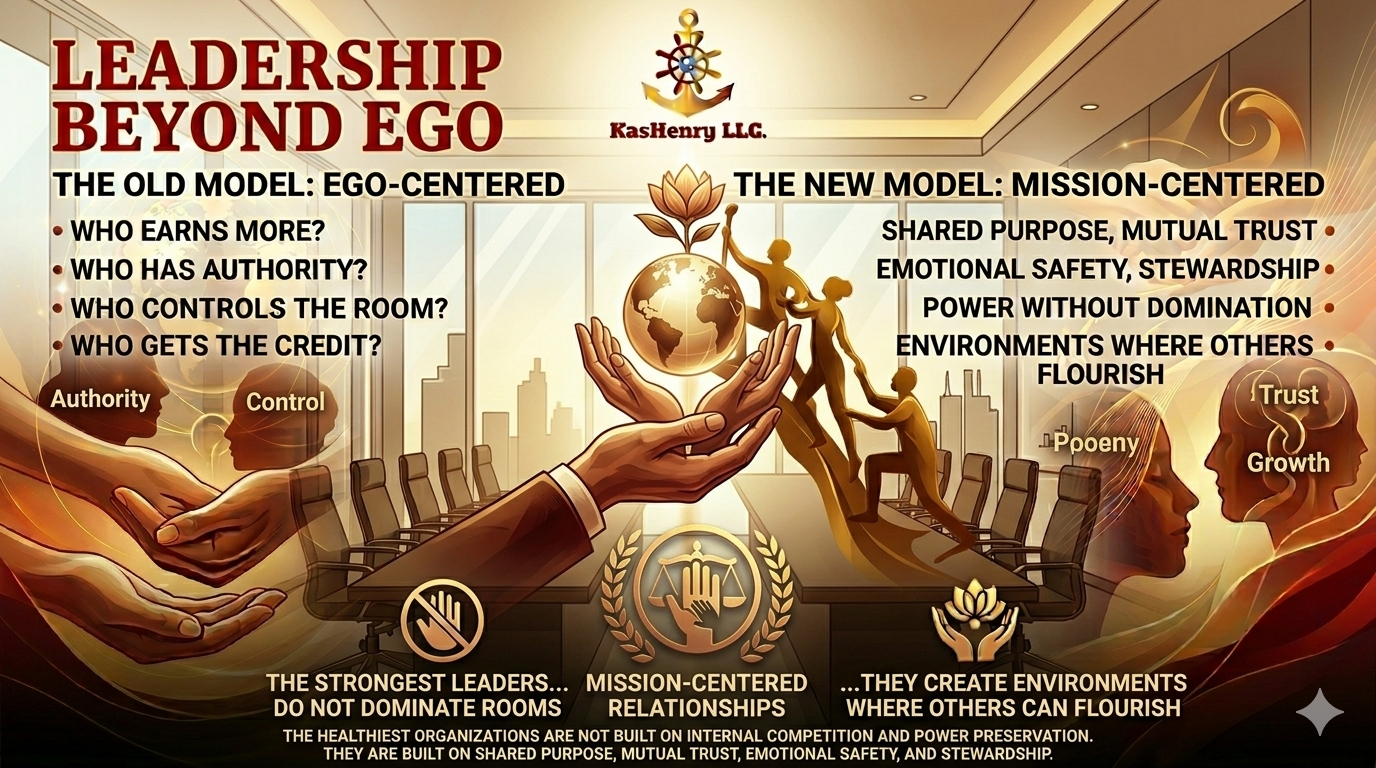
Most modern systems — including corporations — are unconsciously organized around hierarchy, dominance, status, and transactional value.
Who earns more?
Who has authority?
Who controls the room?
Who gets the credit?
This marriage rejects those frameworks entirely.
Their partnership demonstrates something rare:
power without domination.
She embodies executive strength without losing softness.
He receives care without losing dignity.
Neither competes for significance.
Neither diminishes the other’s sovereignty.
Their relationship is mission-centered rather than ego-centered.
That distinction matters enormously in business.
The healthiest organizations are not built on internal competition and power preservation. They are built on shared purpose, mutual trust, emotional safety, and stewardship.
The strongest leaders are not those who dominate rooms.
They are those who create environments where others can flourish.
The Hidden Competitive Advantage: Human Dignity
One of the most striking aspects of this partnership is how openly humanity coexists with excellence.
Clients and executive teams regularly witness this global CFO caring for her husband between meetings, while simultaneously leading transformation initiatives, advising leadership teams, and operating at the highest levels of business.
What surprises many executives is not her competence.
It is her integration.
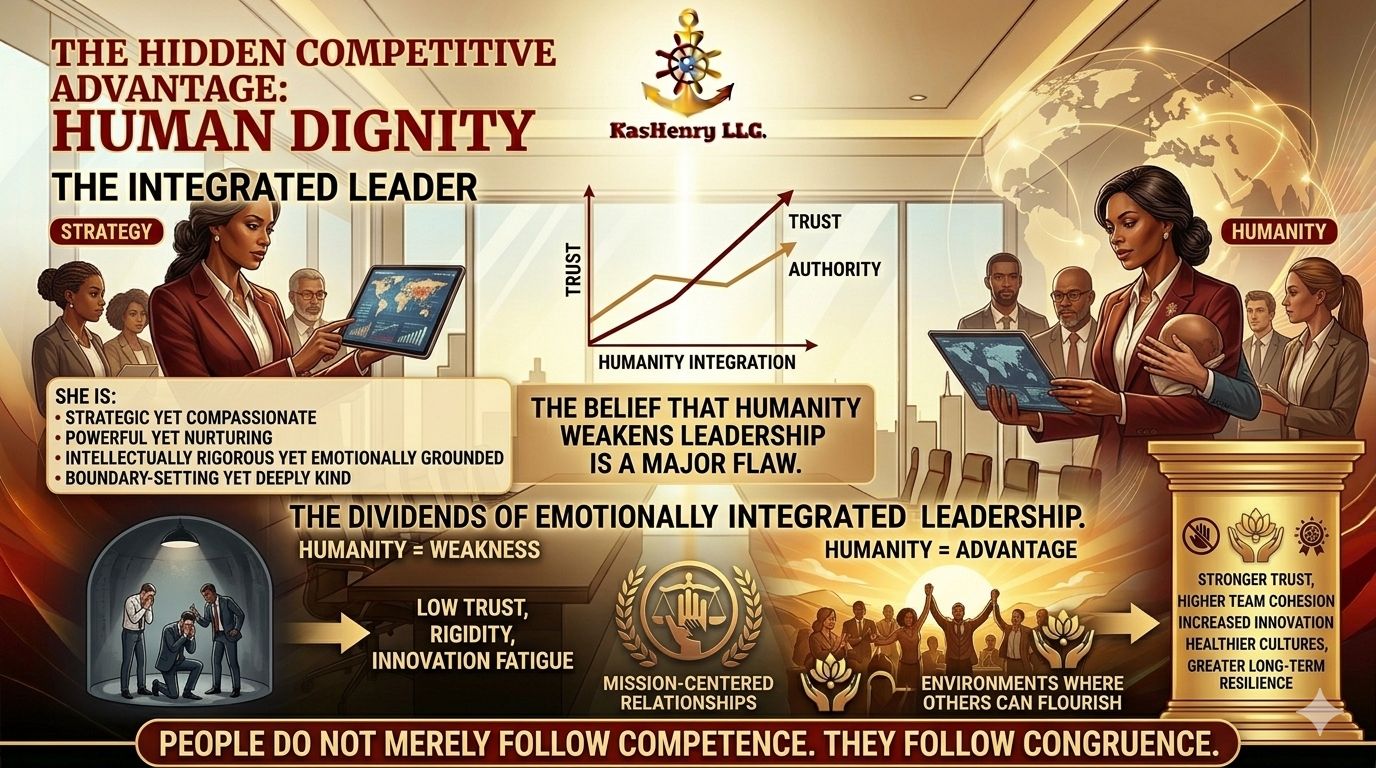
She is:
strategic yet compassionate,
powerful yet nurturing,
intellectually rigorous yet emotionally grounded,
boundary-setting yet deeply kind.
And rather than diminishing her authority, these qualities deepen trust.
This exposes a major flaw in traditional corporate thinking:
the belief that humanity weakens leadership.
In reality, emotionally integrated leadership often produces:
stronger trust,
higher team cohesion,
increased innovation,
healthier cultures,
greater long-term resilience.
People do not merely follow competence.
They follow congruence.
Psychological Safety Is an Innovation Strategy
Their marriage also demonstrates a principle organizations desperately need to understand:
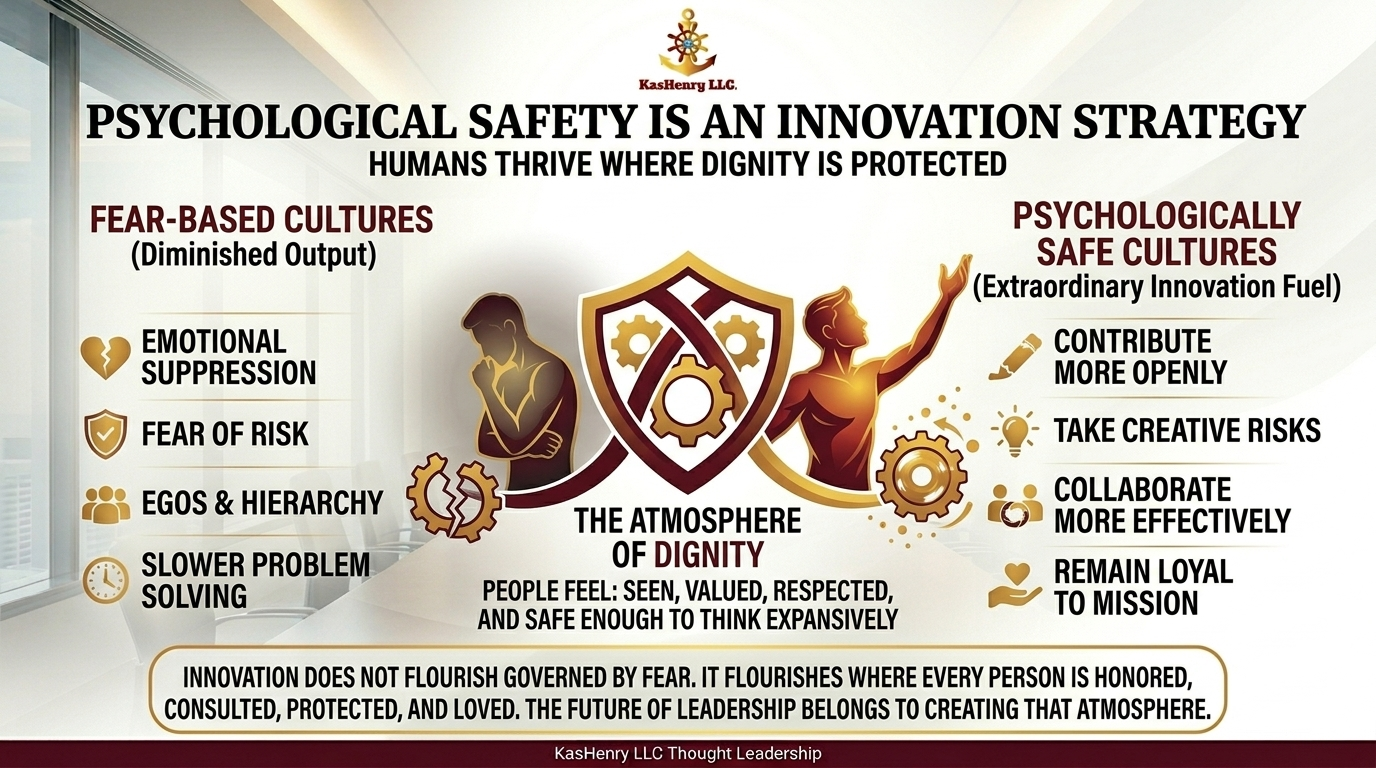
Humans thrive where dignity is protected.
The husband’s illness has not reduced his worth within the relationship.
He is still honored, consulted, protected, and loved.
Likewise, she is not reduced to her economic value or executive title.
She is cherished for her humanity as much as her achievement.
This creates extraordinary emotional safety.
In organizations, psychologically safe cultures consistently outperform fear-based environments because people:
contribute more openly,
take creative risks,
collaborate more effectively,
solve problems faster,
and remain more loyal to mission.
Innovation does not flourish in environments governed by fear, ego, or emotional suppression.
It flourishes where people feel:
seen,
valued,
respected,
and safe enough to think expansively.
The future of leadership belongs to those capable of creating that kind of atmosphere.
Diversity as Expansion, Not Tolerance
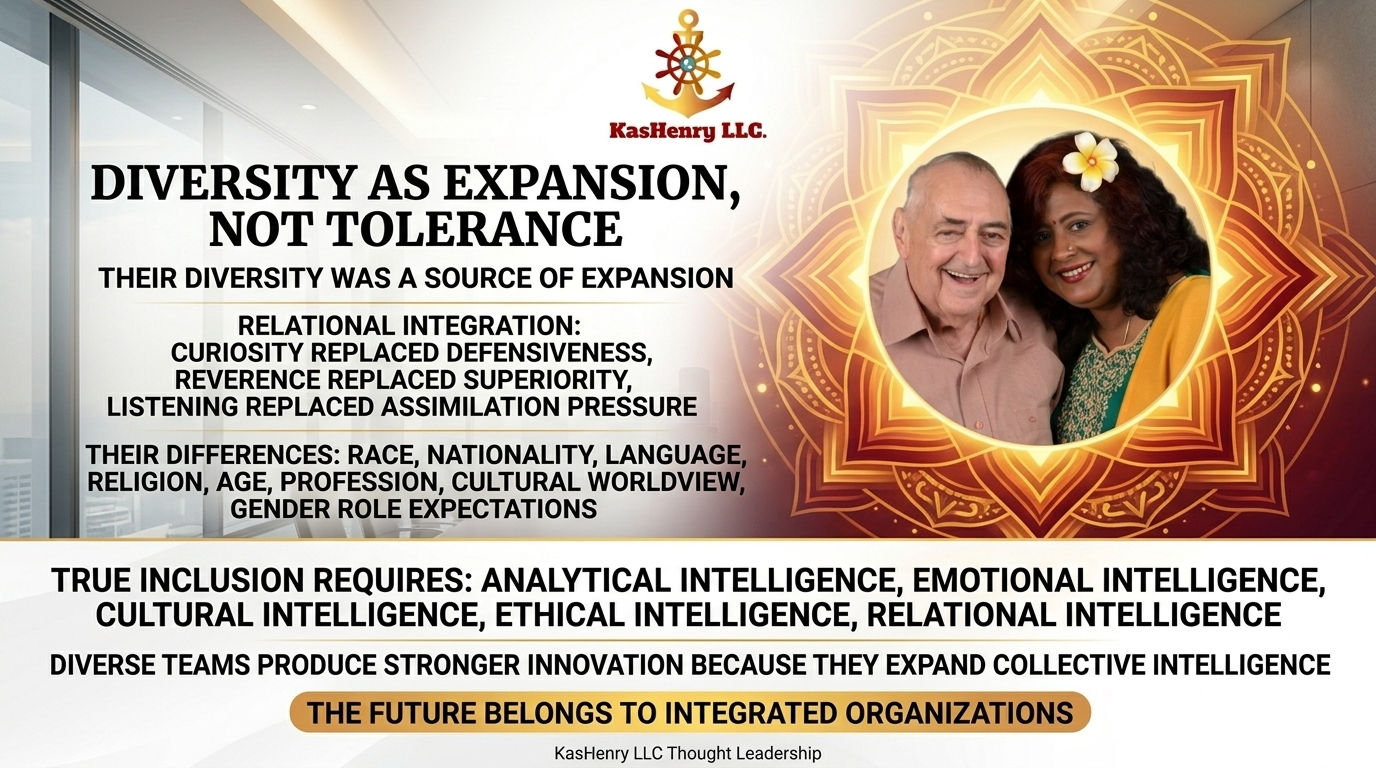
Their relationship also offers a masterclass in diversity and inclusion.
Their differences are extensive:
race,
nationality,
language,
religion,
age,
profession,
cultural worldview,
gender role expectations.
Yet their diversity became a source of expansion rather than division because neither attempted to erase the other.
Instead:
curiosity replaced defensiveness,
reverence replaced superiority,
listening replaced assimilation pressure.
This is precisely where many organizations fail.
Too often, diversity efforts focus on representation while neglecting relational integration and cultural maturity.
True inclusion requires more than demographic variety.
It requires emotional intelligence.
Organizations thrive when diverse perspectives are not merely present, but genuinely valued.
Diverse teams, when psychologically safe, produce stronger innovation because they expand collective intelligence and reduce blind spots.
The future belongs to organizations capable of integrating:
analytical intelligence,
emotional intelligence,
cultural intelligence,
ethical intelligence,
and relational intelligence.
Masculinity and Femininity Reimagined
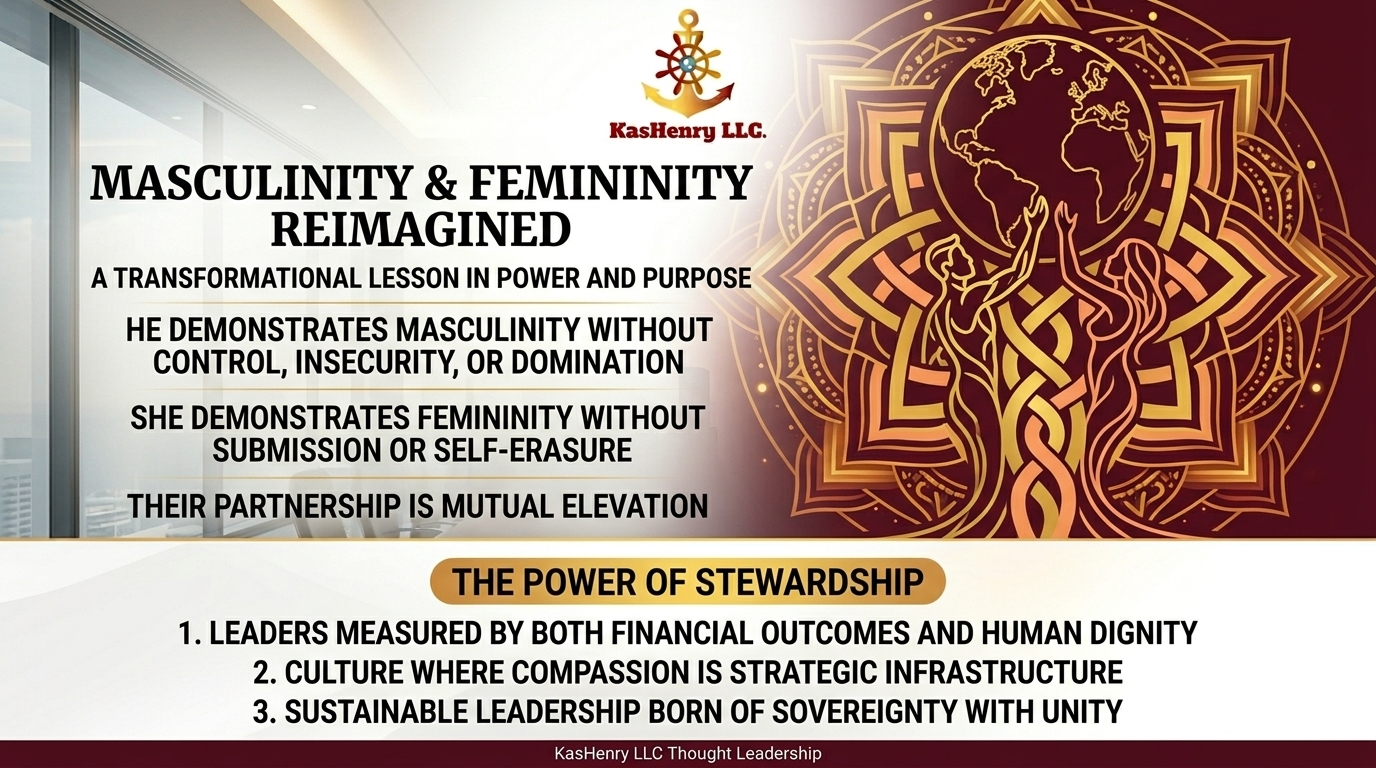
Perhaps one of the most transformative lessons from this partnership is how it redefines masculine and feminine energy in leadership.
He demonstrates masculinity without control, insecurity, or domination.
She demonstrates femininity without submission or self-erasure.
Together they embody:
strength with tenderness,
ambition with devotion,
leadership with service,
sovereignty with unity.
In a world increasingly polarized by power struggles and identity conflicts, this partnership demonstrates another possibility:
Mutual elevation.
Neither seeks to overpower the other.
Both seek to protect what they are building together.
Imagine if organizations functioned this way.
Imagine executive teams organized around stewardship instead of status.
Imagine leaders measured not only by financial outcomes, but by their ability to preserve human dignity while driving performance.
Imagine cultures where compassion was viewed as strategic infrastructure rather than weakness.
That is not idealism.
That is sustainable leadership.
The Business Case for Humanity
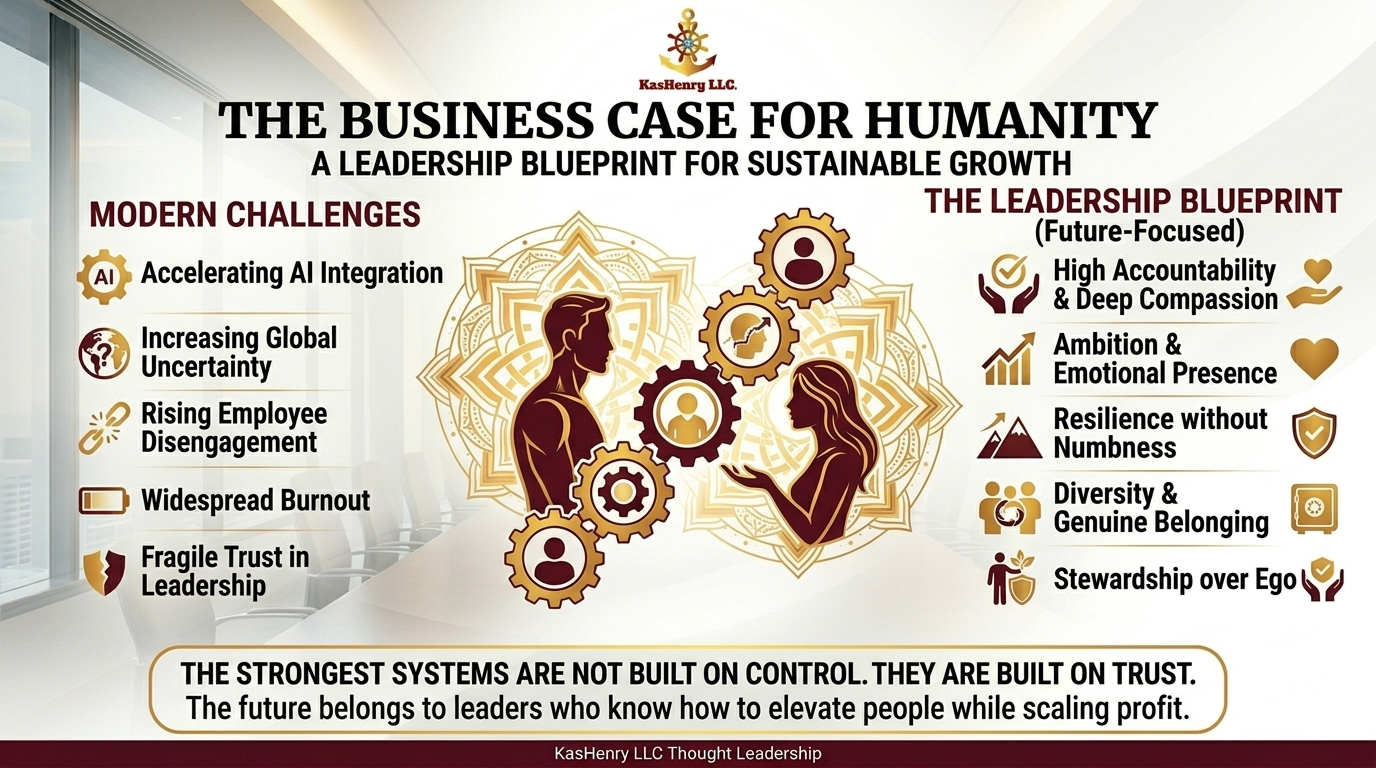
Modern organizations are facing a profound inflection point.
Artificial intelligence is accelerating.
Global uncertainty is increasing.
Employee disengagement is rising.
Burnout is widespread.
Trust in leadership is fragile.
Technical capability alone will not solve these challenges.
The organizations that will thrive in the future are those capable of integrating performance with humanity.
This marriage offers a glimpse into what that future can look like:
high accountability with deep compassion,
ambition with emotional presence,
resilience without emotional numbness,
diversity with genuine belonging,
and leadership rooted in stewardship rather than ego.
The lesson is simple, yet profound:
The strongest systems are not built on control.
They are built on trust.
And the leaders who will shape the future are not merely those who know how to scale profit
but those who know how to elevate people while doing it.
Because at the end of every transformation initiative, business strategy, merger, innovation roadmap, or organizational redesign… there are still human beings.
And humans flourish where love, dignity, courage, and shared purpose are present.
That may ultimately become the greatest competitive advantage of all.


